Glacier Ice: Why Old Ice Turns Blue
Snow is white, a glacier's cracks are blue, and the difference is decades of pressure and a few metres of light.
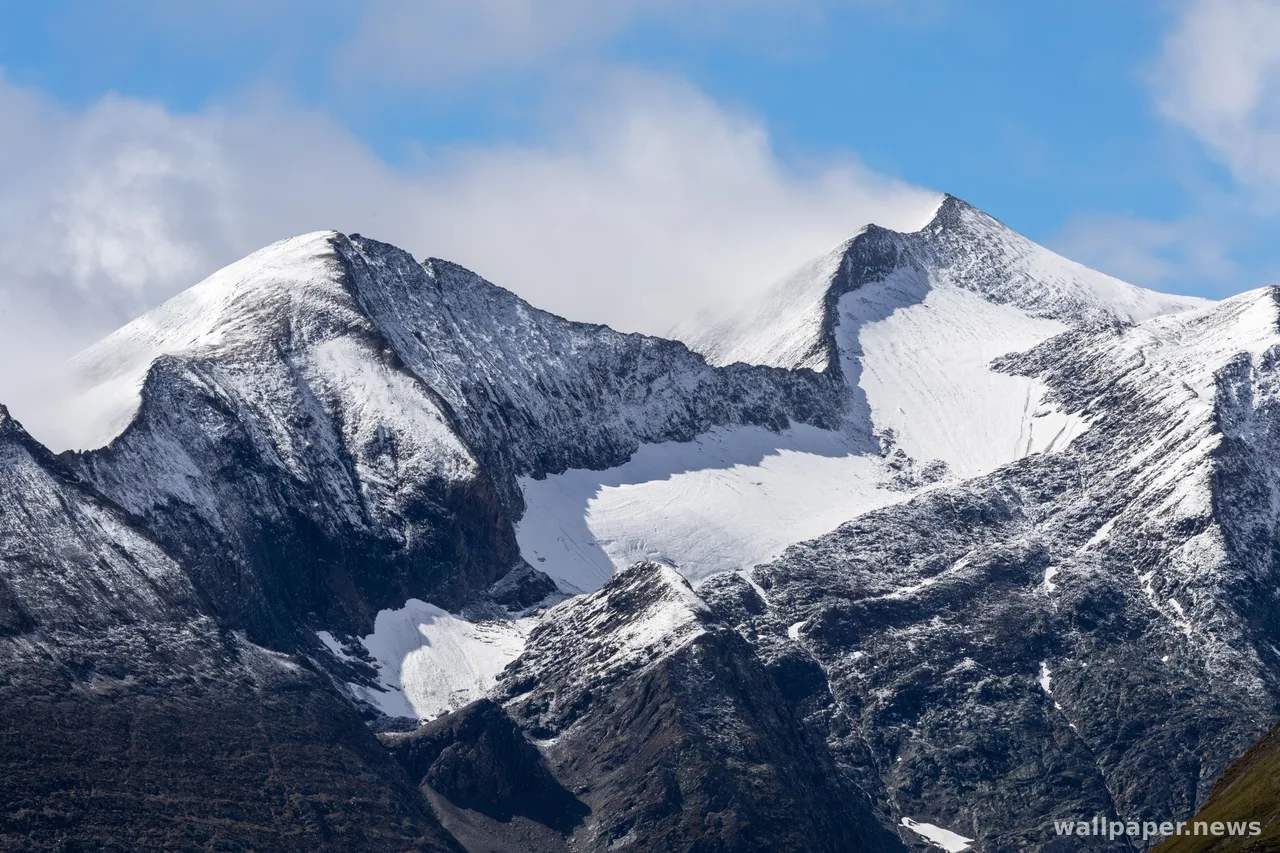
Fresh snow is mostly air, a loose heap of crystals that scatters every colour back equally and so looks white. Buried under later winters, it packs into granular firn and then, over decades or centuries, into glacier ice, with most of the bubbles squeezed out. What remains is dense enough that light can travel a long way inside it before anything turns it around.
Over that distance a small property of water starts to count. Ice absorbs a little more at the red end of the spectrum than at the blue, too little to see in an ice cube, but after a metre or more of travel the reds have thinned out and the light that returns leans toward cyan and deep blue. That is why the colour gathers in crevasses, cave ceilings and the freshly broken faces of calving fronts, while the weathered surface, full of cracks and trapped air, stays chalky.
Overcast days tend to show it best, because bright sun glares off the outer layer and washes the blue toward white. On a screen this ice works in an unusual way, a cool colour with real depth behind it rather than a flat tint. Icons sit on it the way they would on deep water, readable, and still not quite on the surface.

In this collection