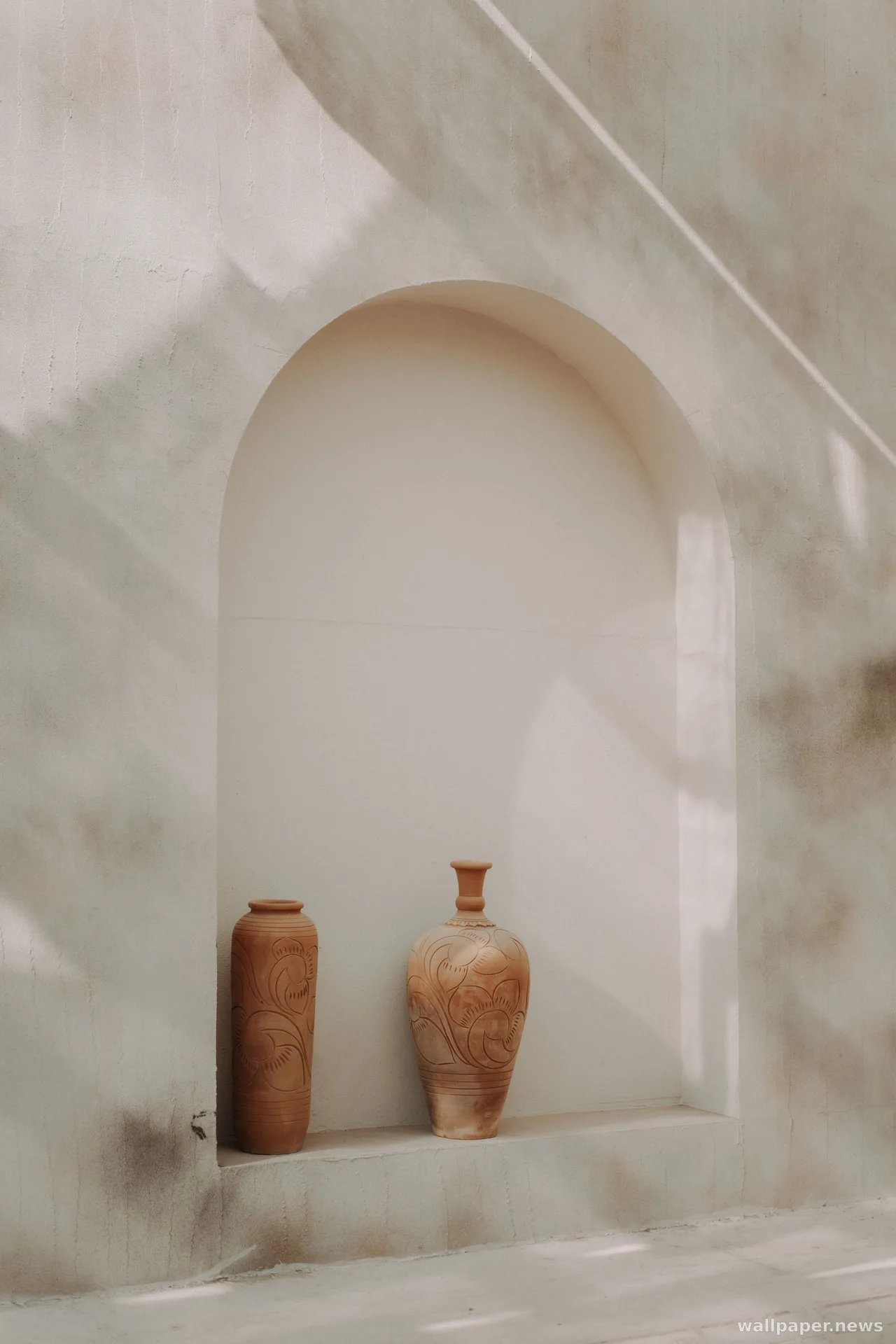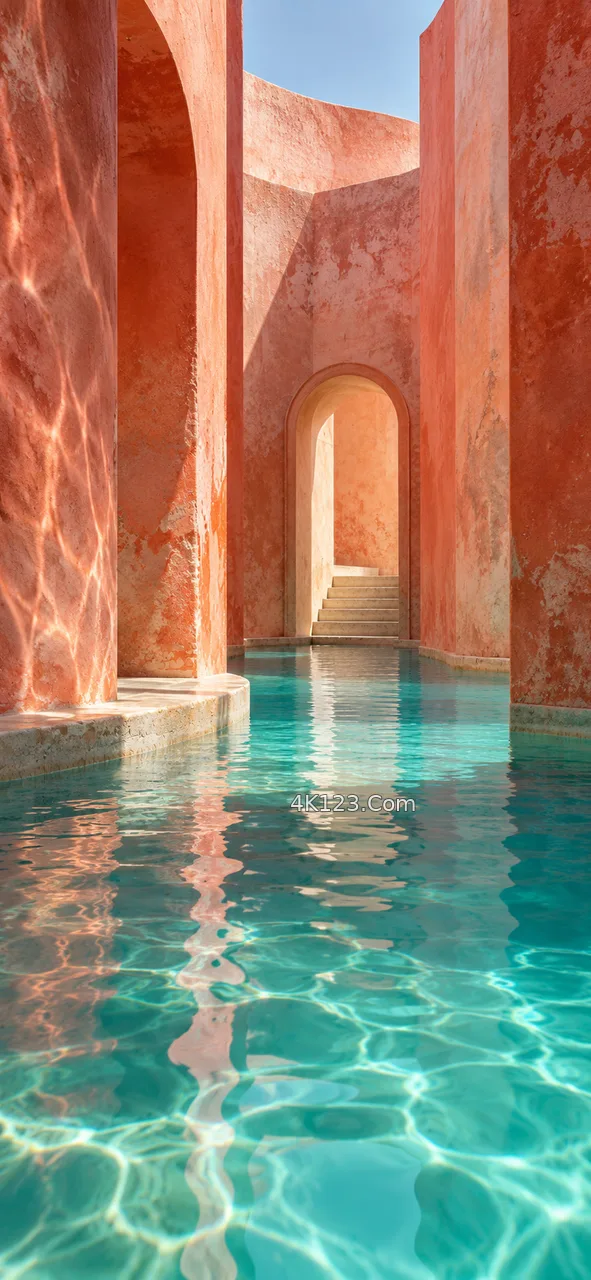
Most phones now sit at a ratio of around 19.5 to 9, more than twice as tall as wide. Painters and photographers rarely worked in a shape this narrow, because a horizon has little room to spread in it. Chinese hanging scrolls came close, and they solved the problem the same way a good phone wallpaper does, by stacking near, middle and far on top of one another rather than setting them side by side.
A frame this narrow also changes how the eye moves. In a landscape picture the gaze tends to sweep left and right; here it travels up and down, so a trunk, a waterfall or a stairwell does more work than a wide valley would. Height starts to read as distance. A subject that takes up a modest part of the middle can feel surprisingly far away, simply because of the empty sky or dark water stacked above it.
The phone then adds its own furniture. The clock usually claims the upper third, the notification list spreads across the middle, and the dock or search bar holds the bottom, so the middle of many lock screens is already crowded. Pictures that hold their detail low and leave the upper part quiet tend to survive all of this best, and they keep working when the same screen is lit a hundred times a day for a few seconds at a time.